What the Algorithm Doesn't Ask
I spend a lot of my research time asking people to tell me about being judged and possibly disbelieved. Not in dramatic terms, just the ordinary, everyday version of it. Being told, gently or not so gently, that they have misremembered something, or exaggerated it, or somehow brought it on themselves. Lately I have started asking a machine to help me listen back to all of that, and I still have not decided how I feel about it.
Most of my projects and research are built out of long conversations. People talking through experiences they have had about being misunderstood. It is rarely one big moment. It is more like a thousand small refusals to take someone at their word, stacked on top of each other until they become a pattern. Holding that pattern in your head, the individual story and the bigger shape it belongs to, takes a long time. It is the whole job really.
I use AI to help with some of that. I will feed it a batch of transcripts and ask it to look for repeated phrases, or to flag the moments where someone hedges, "maybe I overreacted," or "I do not know if this even counts." Hedging matters. It is basically the shape that pressure leaves behind on someone's speech once they have said the same story too many times to people who were not listening properly. An LLM is genuinely good at spotting this. A bit frighteningly good, some days. It will find something across numerous transcripts in an afternoon that would have taken me the best part of a year to notice on my own.
Still, I do not fully trust it. Not because it gets things wrong, but because it is fast in a way that feels almost the opposite to what I know in analysis.
Slow listening is kind of the whole point of qualitative research. That is the reason you sit with someone for two hours instead of just sending them a form to fill in. Meaning tends to live in the bits that do not fit neatly, the pauses, the contradictions, the thing someone says once and then quietly takes back. I have sat with people who describe something painful and then spend the next twenty minutes talking themselves out of how bad it really was. Both halves of that are the finding. If I only kept the tidy half – the bit a model would confidently sum up as "participant reports experience of exclusion" – I would lose the actual thing I am trying to understand, which is how people learn to edit their own story before anyone else even gets the chance to doubt it.
Meaning tends to live in the bits that do not fit neatly, the pauses, the contradictions, the thing someone says once and then quietly takes back.
These days I try to only let AI near the mechanical stuff. Finding every instance of a word. Checking a translation. Tidying up a reference list. I try to keep it away from the bit where interpretation of what someone's hesitation actually means is needed.
Honestly, what I want from AI is pretty small. I just want it to take the time consuming, mechanical parts off my hands so I have got more energy for the part that was always the actual point.
I do not think most people asking these questions really want AI to feel more human. I think they want it to be honest about what it is, which is a very fast pattern finder with no stake in whether the pattern it finds is true, or kind, or even safe to say out loud. That is genuinely useful. It is also exactly the thing you cannot hand your judgement over to.
There is a bigger version of this that goes beyond my own little corner of research too. A lot of the caring language around AI in universities – personalised learning, streamlined feedback – sounds a lot like the language that has been used before to justify other invisible work quietly disappearing, without anyone asking who used to do it or what they actually knew that the system does not. Efficiency is never really neutral. It tends to land hardest on the people alreadydoing the least visible work. Often that is the same people whose stories get flattened the moment they turn into "data" in the first place.
Let AI do the transcribing. Do not let it do the doubting.
Here is my unglamorous plea, from someone who spends their days thinking about disbelief. Let AI do the transcribing. Do not let it do the doubting.
Doubt is not the enemy here. A good, curious kind of doubt – the sort that makes you stop and think, "Hang on, what did they actually say, in their own words, before I summarised it?" – that is basically the whole discipline in one sentence. It is slow. Some days it looks a lot like just being bad at using the tools everyone else has already figured out.
I do not have a clean answer for where the line sits between a research assistant and a shortcut that quietly does your thinking for you. I do not think anyone fully does yet. That is probably the most honest thing I can offer this issue. What I do know is that the people I spend my time listening to have usually been let down by systems that were very confident and moved very fast. I would rather not build my own work the same way.
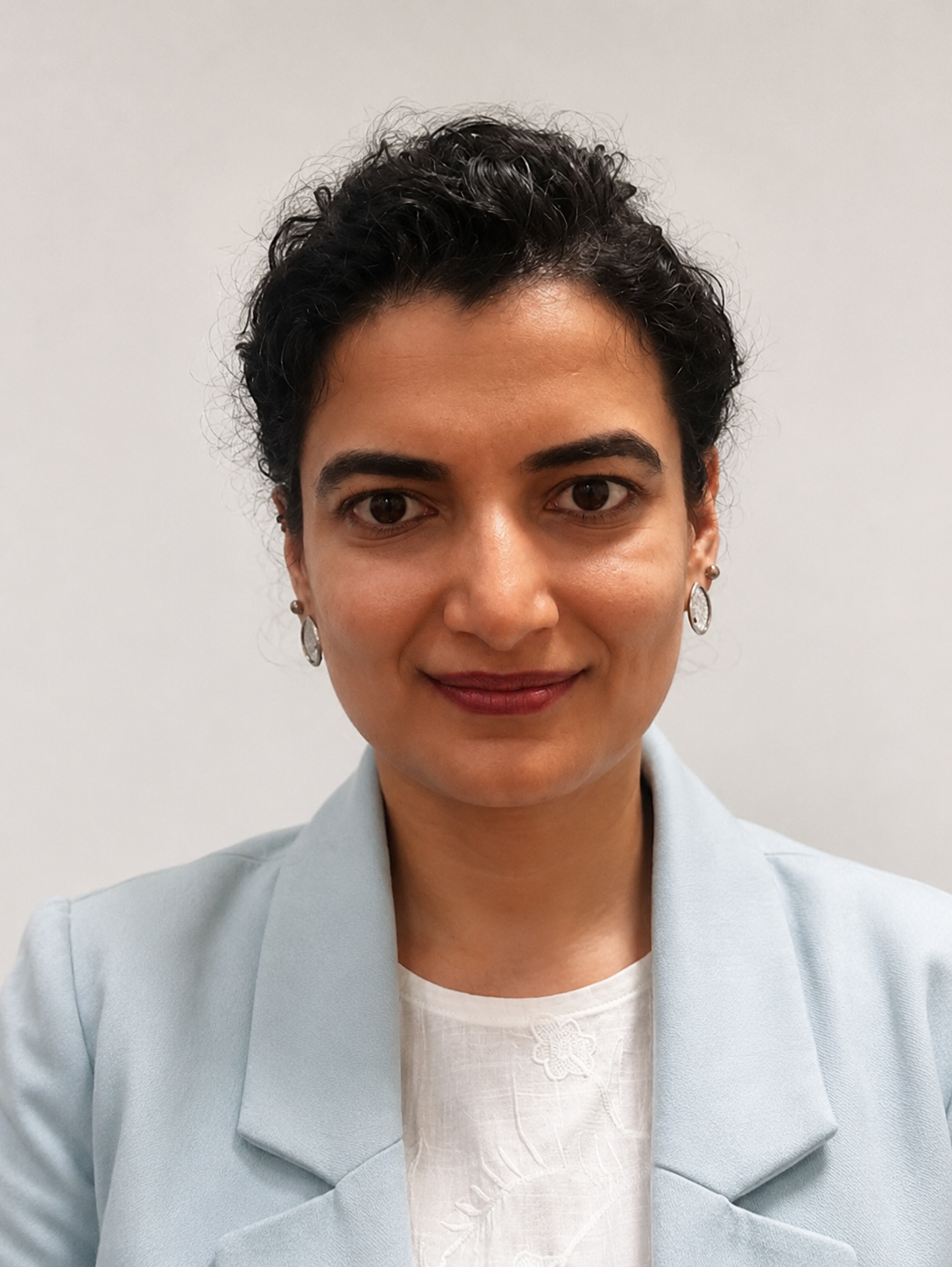
Falak Zehra Mohsin is a PhD researcher in Social Psychology at the University of Exeter.