Making Room for Failure: What Engineering Workshops Can Teach Us About AI
Last June, I found myself in a lecture hall in Salford, listening to a “Star Wars” intro from a head of engineering communications. The important man at the front said: ‘The largest social, cultural and economic change is now since the industrial revolution, so makerspaces are needed more than ever with everything turning digital”. I’d been sent to UNIMAKER Salford 2025 as a student changemaker, tasked with promoting EDI within Engineering workshops, otherwise known as ‘MakerSpaces’.
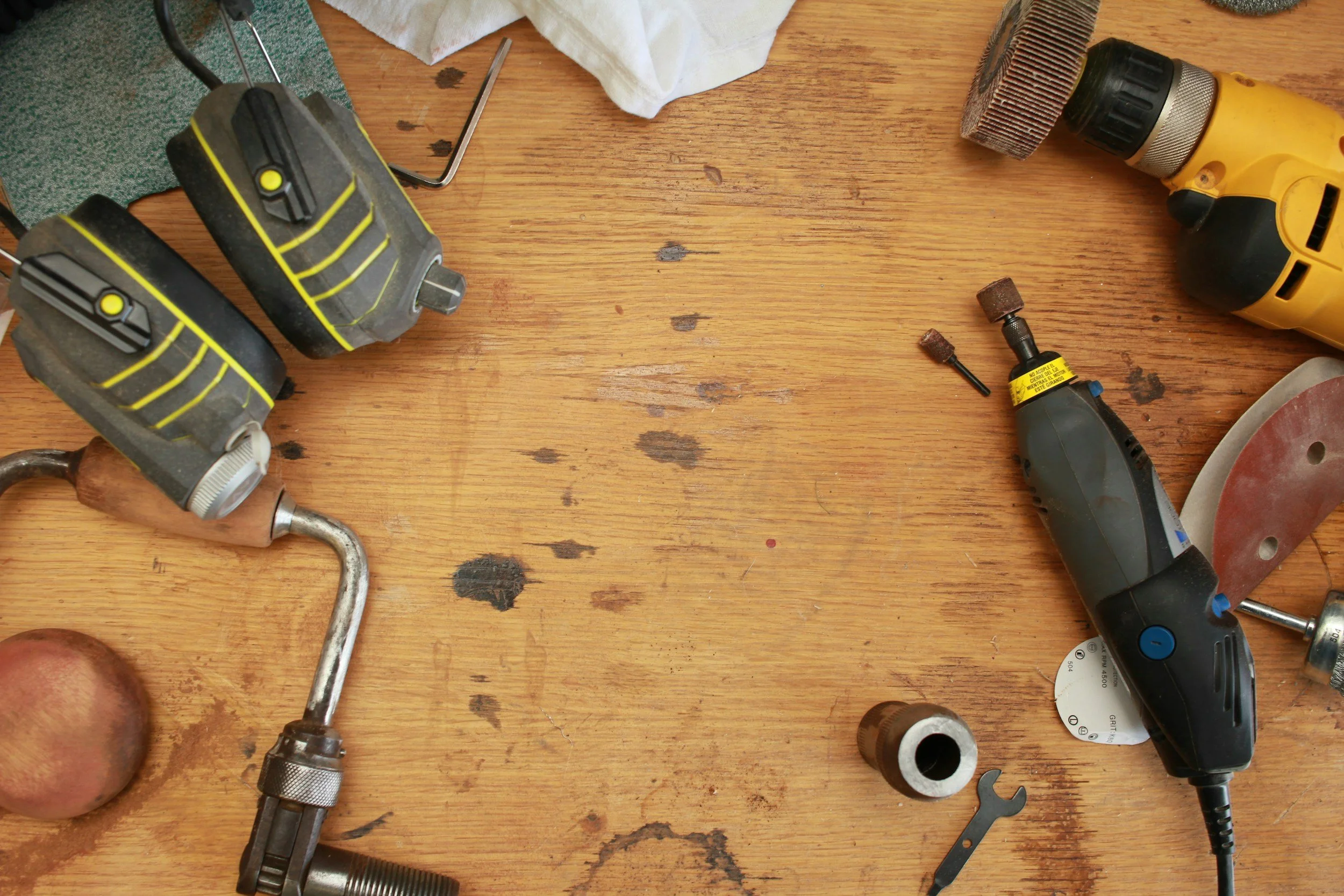
It was a fabulous experience getting to discuss ideas, collaborate and learn with professors, students and experts from around the world. The large perspective was: skillsets are disappearing, new engineering is evolving and more hands-on team based learning is needed …now. You could feel the energy of excitement, wonder and love in that room for the doors makerspaces open and the positive impact they can make. Global MakerSpaces exist so students and communities can get their hands on real materials and make things. They foster creativity, collaboration and innovation which is critical in today’s seemingly never-ending problem crisis. They’re built on a dated but meaningful foundation that you learn by doing.
Failure is not a side effect of that process but the mechanism of it.
I have several unfinished projects sitting in various states of embarrassment that I still intend to go back to one day. But hey - you don’t get good at something by getting it right the first time!
So where does AI fit into a space explicitly built around hands-on practical skills?
I don’t think Engineering is about to be hollowed out by AI the way some other disciplines might be. As Fabian Stephany, assistant professor in AI and work at the University of Oxford, put it in E&T Magazine this year, “technology is not automating jobs, it’s reducing the need for specific tasks and skills.” That distinction matters. AI can help source materials, double-check a structural decision, or generate ten variations of an idea before you’ve had your morning coffee. What it can’t do – not yet, not without a robot arm attached – is stand in a workshop and build something in front of you. We are human beings, not humanknoweverythings. We need to make mistakes and learn with our own hands. Something AI will never be able to teach us is failure. Adjust, try again, adjust, try again: in this iterative, physical loop a huge amount of engineering judgement and self-development gets built. I like to think of it as the Iron Man problem. Tony Stark’s Jarvis is a brilliant assistant, but the suit is nothing without the person who understands the engineering well enough to direct it. Take away the man and you’re left with an expensive collection of circuits, solder and wiring. AI can be Jarvis. It can’t be the person who knows what the smell of burning is and needs to turn off the fire alarm (as helpful as that would be).
That doesn’t mean I think we should treat AI as the enemy of practical skill. I’d resist any account of this that reaches for panic. As students, we now must declare what AI we’ve used in our work, a small but telling sign that the discipline is choosing scrutiny over denial. Bravo board and thank you for trusting us and for recognizing that AI doesn’t have to replace the learning process; it can clear space for more of it. If it takes an hour a week off the parts of a task that are genuinely rote – and that hour goes back into a workshop, a prototype, a conversation with a lecturer you’d otherwise never have had time to see – that’s not hindrance, that’s harnessing!
However, AI can be used badly, as a crutch for every small decision, a way to skip the failing rather than shorten the road to it. This will quietly erode the confidence that spaces like MakerSpaces are trying to build. Critical thinking doesn’t survive on autopilot. Like a muscle, it needs resistance, practice and training. Otherwise it becomes weak. That’s the real test for how we use these tools: whether we’re still the ones doing the thinking.
The story that’s stayed with me most from that conference wasn’t about AI. It was Nav Jot Sauney’s, who started out building prototypes in a makerspace and has since gone on to build tens of thousands of low-cost washing machines for communities without easy access to clean water. Work that began in Iraq with a goal to help one woman and her family has since gone global. It’s one of the most impressive lines I’ve seen from ‘an idea in a workshop’ to ‘livelihoods transformed on the other side of the world,’ and no AI model built that. ‘The Washing machine project’ began with someone with an idea, a willingness to fail repeatedly, and a space to do it in. It didn’t start from a chat with a bot. It started with a meaningful connection to another human being – with pen and paper, and the drive to make a difference.
That, to me, is the case for MakerSpaces in an AI-saturated world. Not as a nostalgic holdout against technology, but as one of the few places left that you learn with your hands before handing the thinking over to something else. AI can be an extraordinary aid: it can assist our practical skills, but it should never be the whole story.
If Engineering is going to stay one of the disciplines least displaced by AI, it will be because we kept making room for people to fail, get up, and make something anyway.
Make something extraordinary, incredible or terrible. Makerspaces have the potential to produce real positive impact. I hope readers can see just how vital they are today.