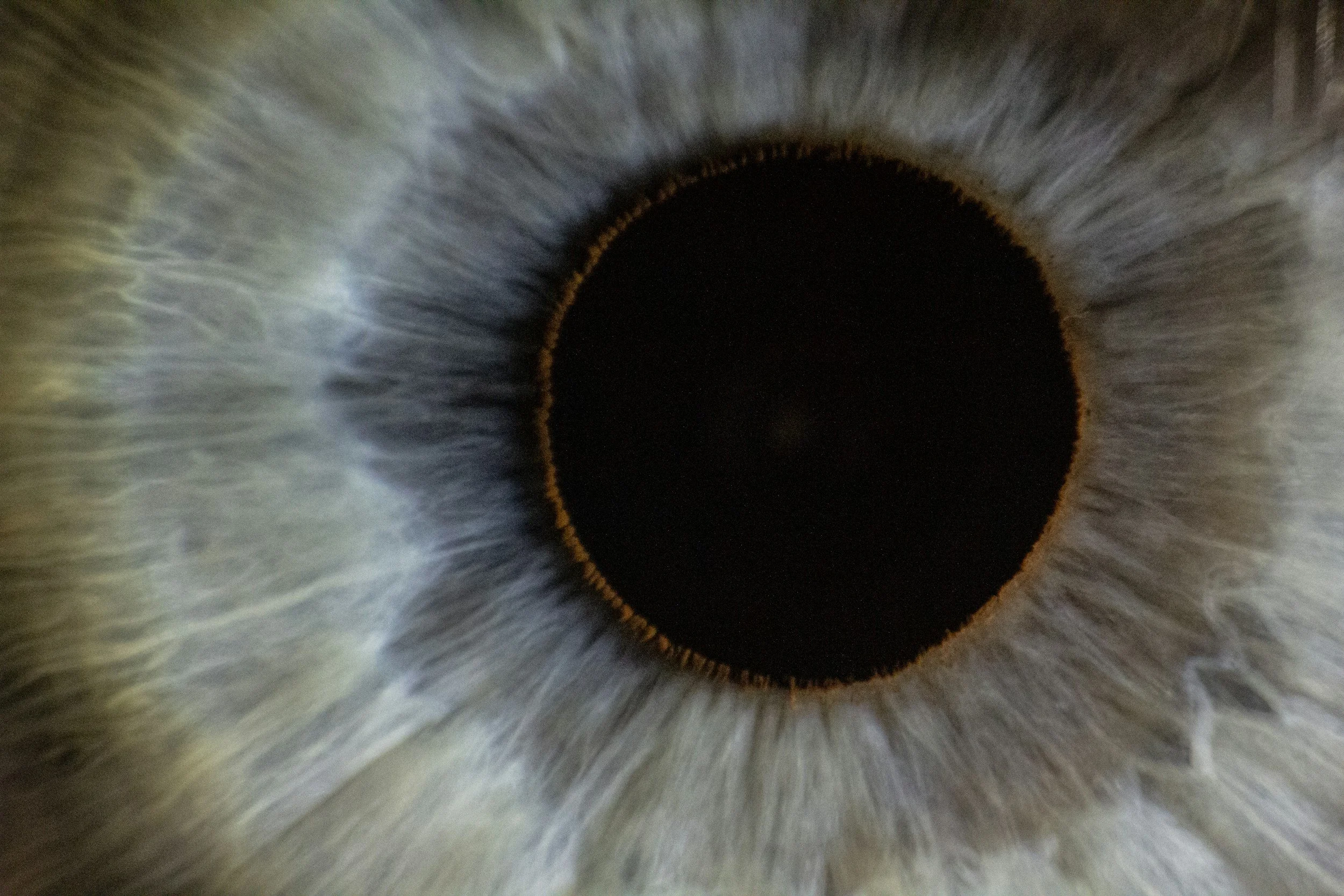
Teaching Machines to See, Teaching Students to Question
I have spent much of my academic career trying to teach machines to see. That sentence still sounds slightly strange to me. We speak casually about computer vision, yet the longer I work in the field, the less convinced I am that seeing is simply about recognising patterns in pixels. Seeing involves context, uncertainty and judgement. Those are human qualities as much as computational ones. Much of my work sits in this space between what machines can detect and what humans need in order to decide.
On the surface, computer vision is a technical discipline. We build models that recognise objects, interpret scenes and learn patterns from images. We measure performance using benchmarks and datasets, always looking for incremental improvements. But over the years I have realised that the technical questions are often not the most interesting ones. The more compelling questions are about judgement: what it means to interpret a model’s output, when to trust it, and when to challenge it.
One lesson that computer vision teaches very quickly is that seeing is not the same as understanding. A model can perform exceptionally well on benchmark datasets and still fail in the real world. Lighting changes, environments shift, and unexpected cases appear that were never captured in training data. Every dataset also reflects choices about what was collected, labelled, and ignored. In that sense, every vision system encodes a partial view of the world. This is why uncertainty matters so much in my research. We spend considerable time thinking about explainability, confidence, and how systems should communicate limitations. The goal is not blind trust in AI. It is something more fragile and more useful: calibrated trust. Knowing when a system is likely to be right, and when it might not be.
The importance of this becomes especially clear in my current research, where we are developing an AI system to support the detection of tibial fractures in very young children presenting to emergency departments, particularly in contexts where physical abuse may be suspected. The aim is not to replace radiologists or emergency physicians. It is to support them. In such sensitive situations, AI must do more than produce a prediction. It must communicate uncertainty, indicate why a decision was made, and help clinicians judge when further review is necessary. The value of the system lies not in replacing human judgement, but in strengthening it. I sometimes wonder whether higher education has fully absorbed this way of thinking.
When I teach computer vision, students can now generate working implementations of models in minutes using generative AI. That shift is not, in itself, the problem. What matters more is what happens afterwards. Students increasingly struggle not with building models, but with evaluating them. Why did the model make this prediction? What assumptions is it relying on? Would it behave differently in another setting? When should we trust it, and when should we not? These questions rarely have simple answers, but they are becoming central to how I think about teaching.
In my own courses, I will start to place less emphasis on implementation and more on interpretation. Students will be encouraged to critique model outputs, identify potential failure cases, and justify when they would override an AI system’s recommendation. These are not peripheral skills; they are becoming core to the discipline. This connects directly to a broader shift I see in AI more generally. There is a tendency in public debate to focus on whether AI tools are accurate or useful. In computer vision research, however, accuracy has never been enough. A model may be confident and still wrong. It may perform well in controlled conditions and fail in deployment. This is why explainability and uncertainty estimation are not optional features; they are essential tools for understanding when a system should not be trusted. Perhaps universities need to place similar emphasis on judgement.
One lesson that computer vision teaches very quickly is that seeing is not the same as understanding.
We often reward students for producing correct answers, yet AI systems are now extremely good at producing plausible ones. What is harder – and more important – is the ability to question those answers. This includes recognising missing information, identifying hidden assumptions, and understanding when disagreement with a system is justified.
Working in computer vision has made me more comfortable with uncertainty. Every dataset exposes blind spots. Every model reveals unexpected failure modes. Every deployment reminds us how much context machines cannot access. Rather than diminishing human expertise, this has strengthened my appreciation of it. Human judgement is not a residual capability; it is what allows us to operate responsibly in the presence of incomplete information. Perhaps this is the most important contribution that AI research can make to education: not better tools, but a deeper understanding of judgement.
Human judgement is not a residual capability; it is what allows us to operate responsibly in the presence of incomplete information.
Computer vision has spent decades improving how machines interpret images. Higher education now faces a different challenge. It must help students learn how to interpret, question, and sometimes resist what machines appear to see. After years of working on machine perception, I have come to think that seeing is never enough. Whether we are interpreting an X-ray, evaluating a model’s prediction, or reading an AI-generated response, the question is not only what is visible, but how we decide what it means – and when we are willing to doubt it.