Fish Fall from the Sky
When I first read the call for this special issue on AI and ethics, I found myself lingering over the word ethics. I was oddly unsure what AI ethics meant in relation to my own work. My research moves between two fields often imagined as sitting uneasily together, the big-data world of artificial intelligence and the very small-data world of ethnography. I could not quite locate where the ethical questions in my own practice began. Was it in the algorithm? The dataset? The prompt? Fieldwork norms and protocols?
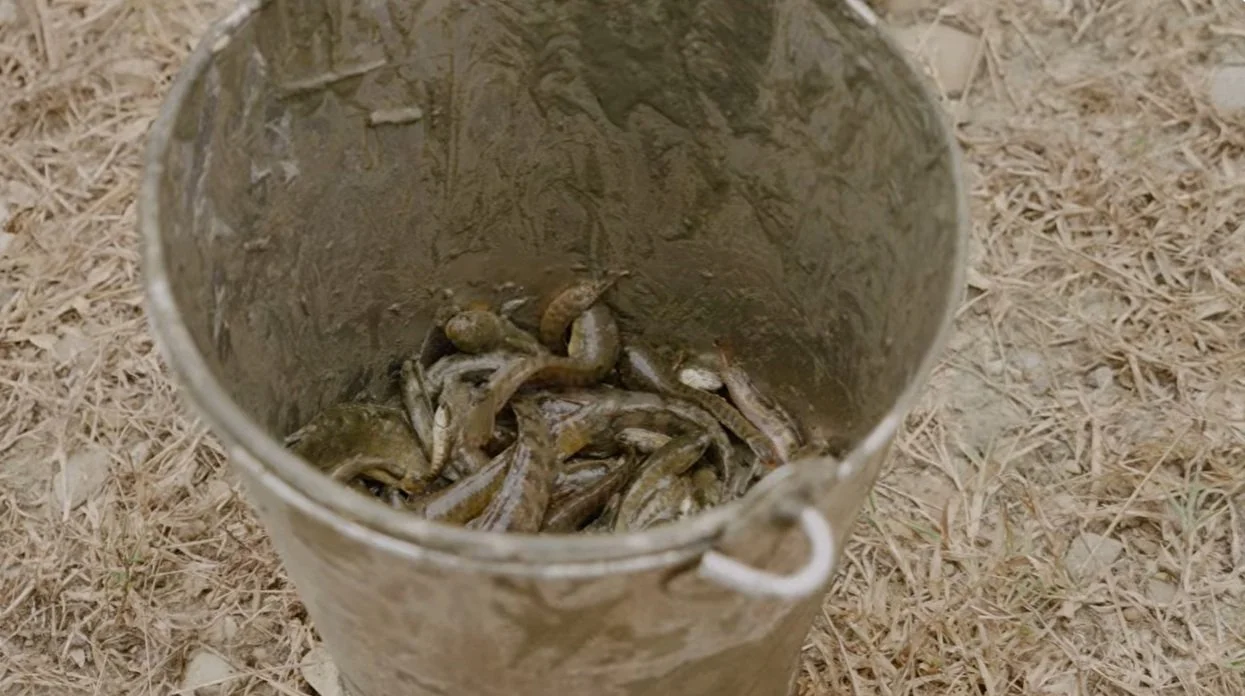
Looking back, my understanding of AI ethics changed somewhere I never expected. It began during the fieldwork in Nepal. I was in a small Indigenous village and, while travelling back to Kathmandu, I stopped to watch a group of children mud fishing. The accompanying adult told me, quite matter-of-factly, that fish fall from the sky. I smiled politely and immediately filed the statement away in my mind. Local belief. Folklore. An interesting cultural explanation. Only later, as they described the meteorological phenomenon of waterspouts lifting fish from rivers before depositing them elsewhere, did I realise they had been describing a perfectly ordinary natural phenomenon.
Before becoming curious, I had become classificatory.
What unsettled me was how quickly I had moved to classify the knowledge I was encountering. I had allowed my assumptions about the context of the encounter to shape my interpretation. Unconsciously, I had drawn a boundary between scientific and cultural knowledge before taking the time to understand what was being shared. I classified what I heard as a cultural belief, because of where and with whom I encountered it. Before becoming curious, I had become classificatory. Looking back, I can only describe that habit as a form of intellectual arrogance. That experience stayed with me when I returned to my research involving AI.
Much of my work uses Natural Language Processing and AI to understand how climate change is discussed in the public domain. Before fieldwork, I approached these methods with confidence. If I wanted to understand how people discussed heatwaves, I searched for the term ‘heatwave’ and ran with it throughout the research pipeline. It seemed reasonable. The category felt stable enough to organise an entire project around.
In the village, however, the concept of heatwave seemed almost irrelevant. More surprising to me was that people rarely talked about heat itself. Instead, their relationship with heat was revealed to me through how they organised everyday life around it, the timing of daily labour, mud houses that remained cool through the afternoon, conversations about when and where to rest, and how neighbours watched for signs of exhaustion in one another. Heat was everywhere, but its experience was not linguistically organised, never mind through the category ‘heatwave’ that I had assumed would reveal it.
Returning to my computational work became unsettling. Nothing about the technology had changed. My code still worked. The models still identified exactly what I had asked them to identify. Yet I realised that the first ethical decision shaping my collaboration with AI had been made long before AI use entered the scene. That was the first moment I could meaningfully locate AI ethics, albeit retrospectively, within my own research practice. At the time of gathering data for computations, it had seemed like nothing more than a methodological necessity. Faced with an immense body of publicly available text, I had to decide where to draw the boundaries of my analysis and which words and categories would make that complexity computationally manageable. Until then, questions such as ‘Was I using AI responsibly? Could I trust its outputs? Were the models fair?’ had felt strangely abstract.
The models had done what I had asked of them.
Only later did I realise that those methodological decisions also determined what became visible and what remained outside the frame. AI had not failed to recognise different ways of experiencing heat. These experiences had never entered the textual world I had asked it to analyse because they were lived in practices rather than expressed through the language I was searching for. The models had done what I had asked of them. They had inherited my assumption that the publicly available textual record could stand in for the experiences I sought to understand.
My research experience has cultivated in me a suspicion towards the ease with which I organise the world into seemingly stable analytical categories. I still find computational methods exciting, and AI remains central to that work. But they no longer feel like technologies that elegantly uncover the world as is. Instead, they invoke in me a sense of (productive) discomfort reminding me that ethics in research begins with seemingly ordinary human judgements about what counts as knowledge, what becomes a category, and what deserves our attention. For me, this has become the most important lesson of working with AI. Ethical practice now extends beyond using these systems responsibly when they are in front of me. It also means noticing how I am always already working from a set of assumptions that I carry into the encounter with AI itself, and how those assumptions shape what I even think I am asking of them. More than anything, bringing ethnography and AI into conversation has taught me to remain teachable by a world that continues, thankfully, to refuse to behave in the ways I expect it to.