Disability, Technology, Ethics and Artificial Intelligence
Although inanimate and soulless, when it enters society technology becomes a quasi-sentient being and open to ethical debate. This is no more evident than in the social division it causes, and the people it excludes from progress and social change. From the 1960s through to the 1990s, I remember a clear social division of the ownership and use of high- and low-tech devices and the cultural value placed on the skills they engendered. The person you “were” determined the technologies you used. There were different devices for different work roles, men and women, children and adults, level of education, and disabled and non-disabled.
If you were a blue-collar worker, your technological ethical value seemed low, you most likely only used analogue telephones, alarm clocks, radios and televisions, and low-tech machines in your home. Your social knowledge was more likely to be verbal, and you were largely excluded from academic thinking which was guarded in closed institutions. From the 1980s, your children had their own digital entertainment, which was looked down on, although, they most likely had greater technological skills than you.
If you were a white-collar worker with a degree, you and your family were felt to have more technological ethical value. You most likely had all the blue-collar worker’s domestic technologies and more, and from the 1980s this was digital not analogue. As a more educated person, you were likely to be one of the first people to own a computer in your home. You were also seen as more technically adept than your children, guided them in their use of technology, and made sure they had access to socially acceptable devices.
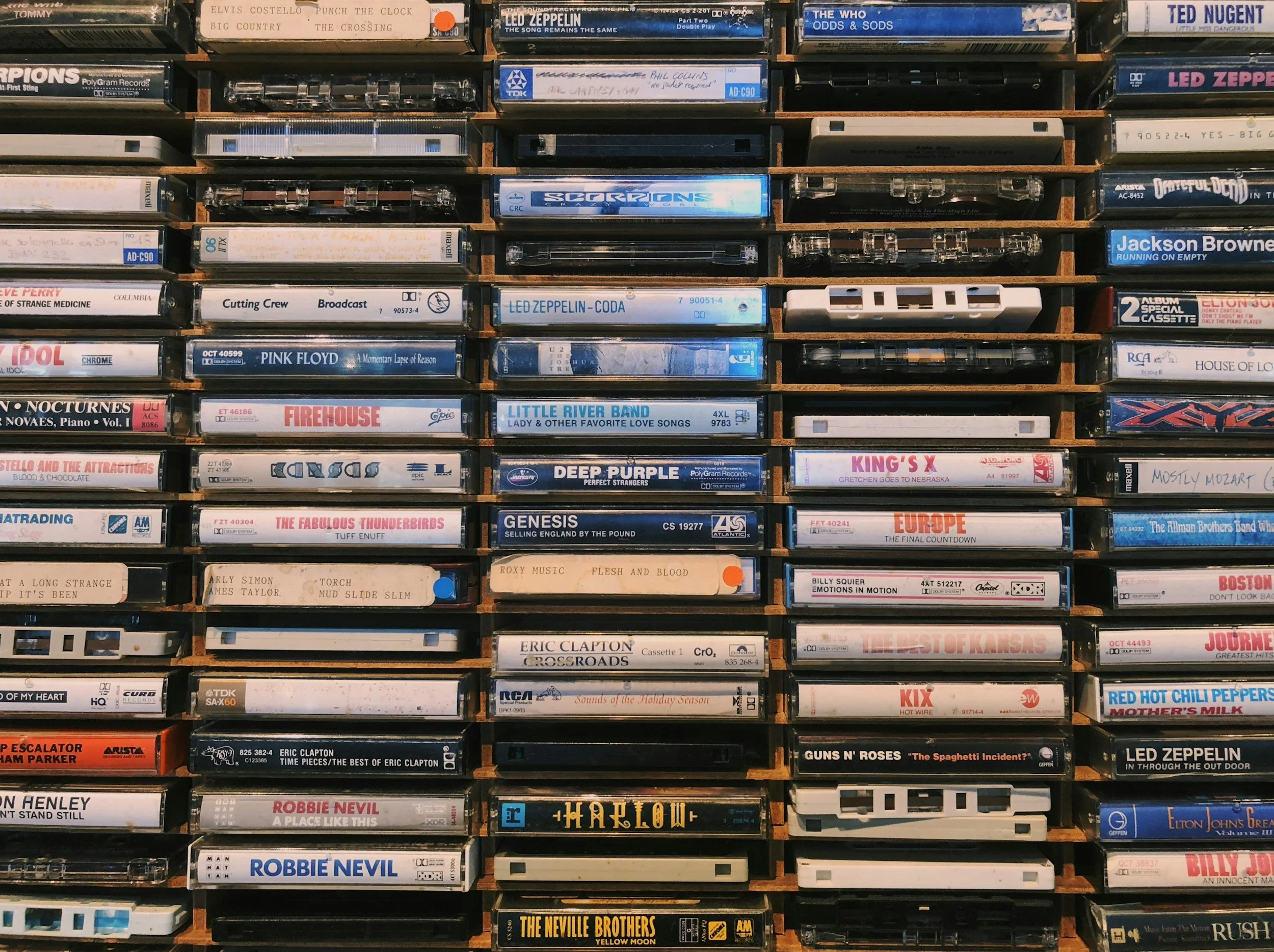
As a child of a filing clerk and a nursery worker, I could be seen as technologically ethically mid-way. I had mechanical toys, a digital watch, a school calculator and a simple ping-pong game that plugged into the television. I also knew roughly as much as my parents about these technologies. The only computers I saw were at secondary school and a friend’s house, and they had no network connection. Their software was on an audio cassette tape, and my friend’s tapes were half software and half Wham!
I am more worried about humans who code them or own the companies that exploit them.
Digital time-telling, arithmetic and ping-pong skills apart, there was one form of ethical inequality we all had in common in those days. We had no networked sources of electronic knowledge at home or the ability to generate it. In other words, we were consumers of knowledge and had no independent ability to create or share it.
There was a bigger ethical divide however, and this was the divide between high-tech for the non-disabled and low-tech assistive technologies for most of the disabled community. Assistive technologies are devices and software designed for disabled people to learn, socialize and work more easily. The posterchildren for these devices in the late twentieth century were often synonymous with mobility, such as wheelchairs and white canes. Few electronic and fewer digital assistive technologies were available even in the 1990s, as people with disabilities were often associated with ethical and intellectual incapacity. Subsequently, images of wheelchair and white cane users became symbols on toilet doors, pamphlets, computer screens and access spaces – these still endure.
There was also an unethical social stigma to using assistive technologies. I experienced this firsthand when my grandmother repeatedly refused to be tested for an analogue hearing aid. In the late nineteenth and early twentieth centuries, when she was young, hearing loss was associated with lack of intelligence, and so many people refused these conspicuous technologies. We had to wait until my uncle and mother were fitted for hearing aids for our genetic condition to be socially acceptable to our family. This era became rooted in my mind as one in which the tide turned on social attitudes to deafness.
Come the twenty first century, AI and what became its younger sibling, machine learning, entered my home.
Despite society only recently catching on to its existence, a model of artificial intelligence was first conceived by the mathematician Alan Turing in a controversial paper in the journal Mind in 1950.* This model provoked ethical and moral dilemmas surrounding this theoretical technology even before it was coded. Were machines to become sentient? If machines could “think,” where did this leave human existence?
In the 1960s, the first experimental software coded using this model offered a system of re-creating basic yet fast reasoning systems that could be ethically positive. This software had the potential to support learning and became a particularly powerful tool for those with mobility, perceptual, cognitive and language difficulties. Although, it was not until the new millennium that many digital devices caught up.
Suddenly, like schools and workplaces in the latter years of the twentieth century, people with and without disabilities are no longer two distant technological communities.
In the Noughties, computing power to size ratio increased just as social attitudes changed to enable the greater use of AI on the go. Consequently, many traditional technologies such as the computer, television and telephone became small and portable, then merged and transformed to become my smartphone and laptop. These devices became cheaper and easier to use too. Equally, both blue- and white-collar workers could use them effectually, blurring previous social and ethical lines.
Assistive technologies were not beyond this evolutionary process and opened more mainstream experiences to the disabled community. The speech to text systems that are now ubiquitous in my smartphone for instance were heavily influenced by machine learning and first developed as a form of technology to enable those with limited mobility to create text.
Then something truly revolutionary happened. Instead of developing technologies only for people with disabilities, software companies pivoted and merged assistive software into mainstream systems. As an early adopter, Microsoft first introduced special “assistive packs” for Windows in the 1990s but this could only be loaded separately by disabled users. In the Noughties, these became integrated as standard features in their regular operating system and led to a trend that was copied by companies such as Apple and Android.
In the 2020s, our new, potentially more ethically available “everyman” technologies can now be described as integrated or inclusive technologies rather than assistive or mainstream ones. Likewise, generative AI apps on these systems can develop regular descriptions of images for people with visual impairment, generate transcripts for people with hearing loss or help shape ideas for those with communication difficulties. Thus, the earliest ethical worries of artificial intelligence were countered at least in part by its benefits.
And yet, general ethical concerns about artificial intelligence persist. Will these technologies be a threat to humanity? Will they “out-think” humans and pose a threat to our safety?
I am personally relaxed about these issues. I am more worried about humans who code them or own the companies that exploit them. I am also more worried about the arms race some countries are pursuing to develop these technologies quicker than others to gain economic dominance.
Most of all, the everyday social ethics of this new trend is not just a small step forward in terms of software development. It is also a transformation of the social message that technology sends its users. Suddenly, like schools and workplaces in the latter years of the twentieth century, people with and without disabilities are no longer two distant technological communities. We are all becoming social and intellectual learners with complex digital needs.
*Turing, A. (1950). Computing machinery and intelligence. Mind – A quarterly review of psychology and philosophy, 59(236), pp. 433-460.

Simon Hayhoe